01
/portfolio
Aquapolis Floating Habitats
Undergraduate Architecture Thesis / 2023
Architecture
Sustainability Focused
Urban Design
Climate Adaptation

Modular floating communities responding to sea-level rise.
The Premise
Coastal cities like Mumbai are running out of time. Sea-level rise isn't a distant projection, it's already reshaping which neighborhoods flood, which populations displace, and which infrastructure fails. Most architectural responses to this treat rising water as an enemy to defend against: seawalls, barriers, elevated foundations.
Aquapolis asks a different question: For a wellness product, friction undermines the core value proposition, the ease, calm, and consistency users came for in the first place.
Thesis Statement
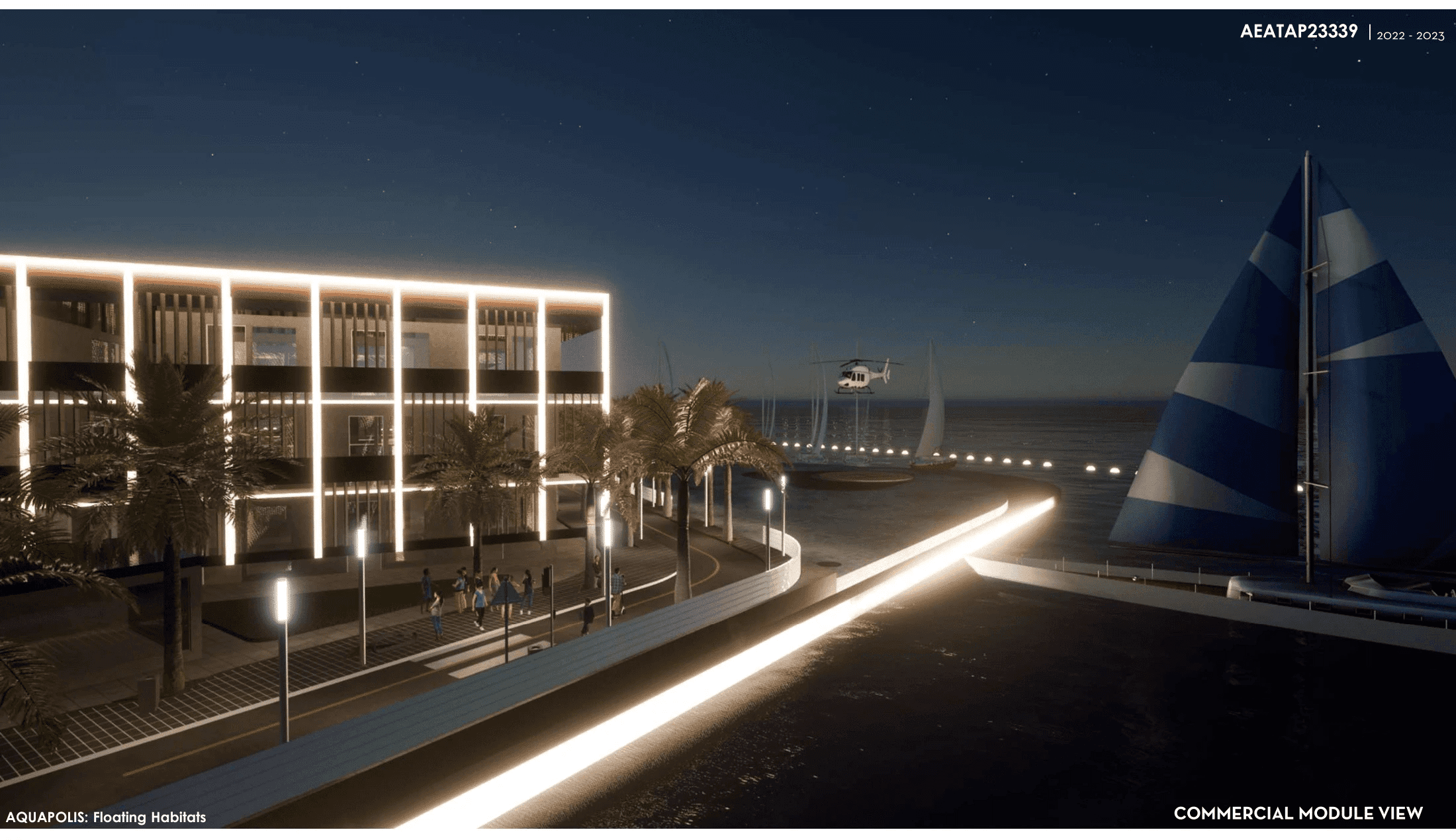
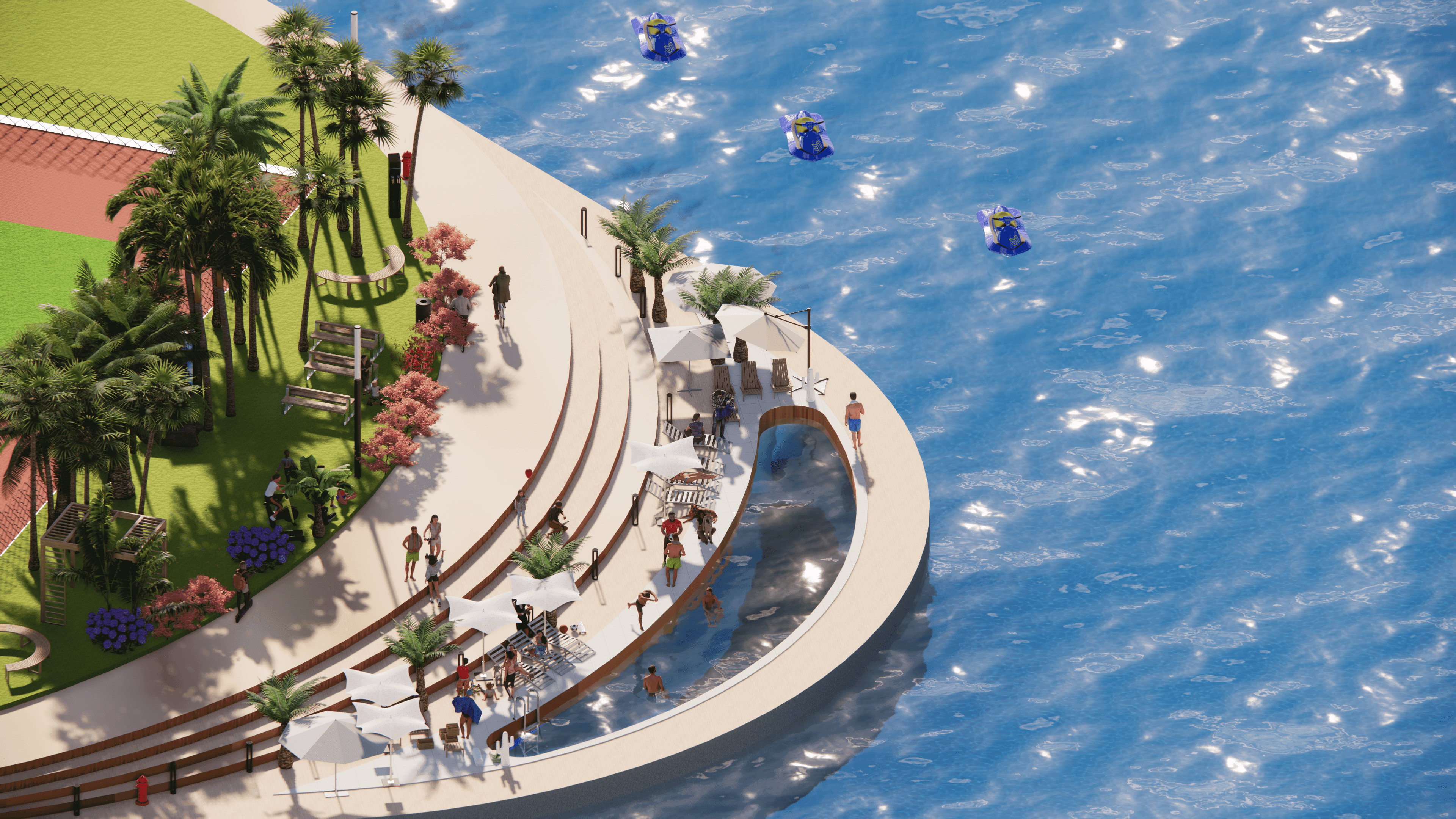
Floating Habitats proposes modular, self-sufficient floating communities designed as a climate adaptation strategy for coastal urban regions facing displacement and permanent inundation. The project reframes water as a design medium, not something to resist, but something to build with. Architecture here functions simultaneously as infrastructure, policy proposition, and adaptive living model.
The Approach
The project research grounded itself in Mumbai, a city where 40% of the population lives in informal settlements, many along the coast, and where the difference between flood-vulnerable and flood-safe housing is often the difference between generational stability and displacement. Research included coastal vulnerability mapping, precedent studies of existing floating structures (from Dutch water villas to Southeast Asian stilt villages), and modular construction systems capable of scaling from single units to full communities.
Design Principles
Four principles shaped every design decision:


Design Development
The proposal developed through iterative modeling, from individual unit typologies through cluster configurations to full community layouts. Each scale tested a different question:
Does the unit work as a home?
Does the cluster work as a neighborhood?
Does the community work as a piece of a city?
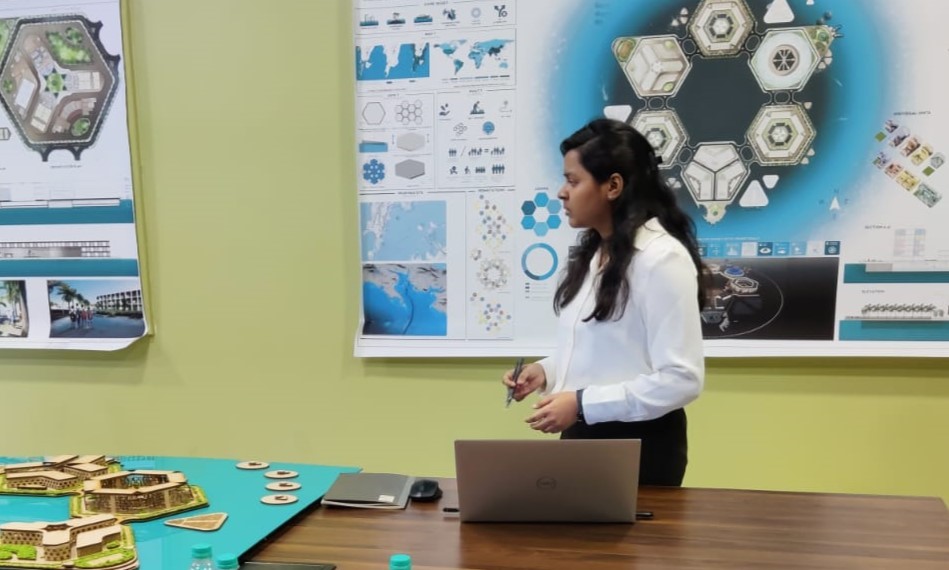
Twinmotion and Rhino allowed spatial testing at each scale, and physical models validated modular connection systems.


What the Thesis Produced
A full architectural proposal at three scales (unit, cluster, and community) with rendered visualizations, technical documentation for modular construction, and a policy framework outlining how such communities could be phased into existing coastal municipalities. The design isn't a fantasy, it's a serious proposition for how coastal architecture might evolve in the next two decades.
What This Project Taught Me
Thinking at civic scale changes what "design" means. When your unit is a city, you're not just designing objects, you're designing systems, incentives, and futures. Every decision has second and third-order effects. Aquapolis was where I first learned to hold complexity without collapsing it into a single answer.
Recognition
The thesis was selected for National Awards for Excellence in Architectural Thesis (AEAT) by Council of Architecture for its ambition and cross-disciplinary approach, earning support from faculty who described the concept as futuristic but structurally rigorous.


02
/see more